
What technical details matter most when choosing a streetwear tracksuits manufacturer?
A heavyweight tracksuit looks deceptively simple on a rack, but most production disasters begin long before the first seam is sewn. When independent brands with real traction decide to scale their matching sets, they often assume that finding a factory capable of making a hoodie means that same factory can seamlessly produce a premium tracksuit. This is one of the most expensive miscalculations in the apparel industry. The reality is that producing a cohesive, high-quality sweatsuit is a delicate balancing act of fabric tension, wash consistency, and silhouette engineering.
On paper, a manufacturer may look entirely capable. They might send a flawless pre-production sample that features the perfect oversized drop shoulder and a heavy, structured drape. However, the true test of a specialized streetwear factory is never the first sample — it is the execution of a five-hundred-piece bulk run where the hoodie and the joggers must match perfectly after an aggressive acid wash. When established streetwear brands transition from sampling to bulk, the technical gaps in general apparel manufacturing are brutally exposed through mismatched dye lots, unexpected shrinkage, and distorted pattern grading.
Why do premium streetwear tracksuits often fail during the sample-to-bulk transition?
Sample-to-bulk failure in premium tracksuits usually stems from uncontrolled fabric shrinkage, inconsistent wash techniques across batches, and pattern grading issues. A single sample might look perfect, but scaling heavyweight fleece requires strict pre-production testing to maintain silhouette balance and tactile consistency across the entire production run.
The transition from a single approved sample to full-scale bulk production is where the most critical vulnerabilities in the supply chain are exposed. When product development teams sign off on a sample, they are looking at a garment that was likely cut and sewn with intense individual attention. However, bulk cutting introduces an entirely new set of variables. In a standard factory environment, layers of fabric are stacked and cut simultaneously. If the streetwear apparel manufacturer does not account for the natural tension and grain of heavyweight French Terry or brushed fleece, the fabric can shift during the cutting process. This results in silhouette imbalance, where the legs of the sweatpants twist or the body of the hoodie loses its intended boxy structure.
Furthermore, batch-level variation is a silent killer for custom tracksuit production. A tracksuit is inherently a matching set, meaning the top and bottom must look and feel identical. When producing in volume, fabric rolls are dyed in large vats. If a factory lacks rigorous tech pack review and quality control protocols, slight temperature fluctuations or timing differences in the dye house will result in a hoodie that is half a shade darker than the accompanying joggers. For brands with validated market demand, delivering a mismatched tracksuit is unacceptable and instantly damages consumer trust.
The sample-to-bulk gap is also widened by how factories handle shrinkage. Premium streetwear relies heavily on dense, heavyweight cotton. If the fabric is not properly pre-shrunk or if the shrinkage rate is miscalculated during pattern development, the final garment will deform after the consumer's first wash. A specialized cut-and-sew streetwear factory will conduct extensive print and wash testing on the exact bulk fabric before mass production begins, ensuring that the dimensions locked in during the pre-production approval phase remain true throughout the entire run.
How does heavyweight fabric selection dictate the entire manufacturing process?
Heavyweight cotton and French Terry require specialized cutting and sewing techniques to prevent seam distortion. Procurement teams must verify that the streetwear manufacturer uses reinforced stitching and pre-shrunk treatments, as heavier weights drastically alter the drape, needle tension, and durability of the final sweatsuit.
Choosing a 450 GSM or 500 GSM fleece is not just a design choice; it is a fundamental shift in how the garment must be engineered. Many brands assume that upgrading to a heavier fabric simply makes the tracksuit feel more premium. In reality, heavyweight fabrics fight back. They resist standard sewing machines, push against needles, and behave unpredictably when subjected to heat and moisture. When an apparel manufacturer for streetwear brands accepts a heavyweight project, they must recalibrate their entire production line to accommodate the material's thickness and density.
The first major hurdle is sewing tolerance. Standard factories are accustomed to lightweight knits and basic jersey cotton. When they attempt to sew heavyweight fleece, especially at intersection points like the underarm gusset or the waistband of the joggers, standard needles can break, or the stitching can become uneven. This leads to skipped stitches and weak seams that will eventually unravel. To counter this, a true streetwear manufacturing partner will utilize heavy-duty overlock machines and implement reinforced stitching techniques, such as twin-needle topstitching, to ensure structural integrity.
Fabric weight and hand feel also dictate the finishing processes. A dense fabric absorbs dyes and chemical washes very differently than a lighter fabric. If a brand wants a vintage, lived-in feel on a 500 GSM tracksuit, the factory must adjust the enzyme wash duration precisely. If the wash is too short, the fabric remains stiff and abrasive; if it is too long, the structural integrity of the cotton fibers breaks down, leading to premature pilling. Procurement teams evaluating a custom streetwear manufacturer must look beyond the fabric swatch and ask specific questions about how the factory handles needle tension, seam bulk, and wash penetration on heavyweight materials.
What makes color matching and wash consistency the biggest nightmare for custom tracksuit production?
Achieving identical wash effects on both the hoodie and joggers is notoriously difficult. Acid wash, stone wash, and enzyme treatments react differently based on fabric tension and dye lots, meaning specialized streetwear factories must implement rigorous batch-level color control to prevent mismatched sets.
The defining characteristic of a premium tracksuit is its uniformity. However, when complex wash techniques are introduced, maintaining that uniformity becomes a severe technical challenge. An acid-wash hoodie and sweatpants set might look incredible in a tech pack, but executing that vision across thousands of units requires an extreme level of chemical and operational control. The fundamental problem is that the top and bottom of a tracksuit are often cut from different sections of a fabric roll, or sometimes even different rolls entirely, depending on the marker efficiency during bulk cutting.
When these garments enter the wash house, the variables multiply. Stone washing and acid washing rely on physical abrasion and chemical reactions. The heavier seams of the hoodie — such as the kangaroo pocket and the double-lined hood — will absorb the wash differently than the relatively simpler construction of the sweatpants. If the factory does not process the tops and bottoms in the exact same wash batch, with the exact same water temperature, chemical concentration, and cycle time, the result will be a noticeable color discrepancy. A hoodie that looks charcoal grey paired with joggers that lean slightly more towards faded black is a critical failure in streetwear product development.
This is where the distinction between a general apparel factory and a specialized partner becomes obvious. A reference point for specialized custom , such as , understands that wash consistency is not achieved by luck. It requires extensive pre-production sampling where the wash formulas are locked in and documented.
Furthermore, it requires strict batch-level tracking. Procurement teams must verify that their chosen streetwear clothing manufacturer has the operational maturity to wash tracksuit components as cohesive units rather than isolated garments. Without this level of control, brands risk receiving inventory that cannot be sold as a matching set.
Why is oversized fit engineering fundamentally different from simply sizing up?
True oversized fits demand precise pattern development to drop the shoulders and widen the chest without making the garment look sloppy. A technical streetwear apparel manufacturer re-engineers the tech pack rather than just scaling up standard dimensions, ensuring a deliberate and structured silhouette.
One of the most common misconceptions in apparel sourcing is the belief that an oversized fit is just a standard garment graded up by two sizes. This misunderstanding leads to tracksuits that look cheap, ill-fitting, and completely disconnected from modern streetwear aesthetics. When a brand simply sizes up a basic hoodie, the armholes become excessively deep, the hem falls too low, and the neckline becomes uncomfortably wide. A true oversized or boxy fit is a highly engineered silhouette that requires entirely new pattern development.
For a premium tracksuit, the geometry of the pattern must be meticulously calculated. The shoulders need to be intentionally dropped to create a relaxed drape, but the sleeve length must be adjusted accordingly so the cuffs still hit the wrist properly. The body might be widened to create a boxy look, but the hem needs to be cropped or fitted with a tight ribbing to maintain structure and prevent the garment from looking like a tent. Similarly, wide-leg or baggy joggers require careful grading at the hips and thighs; if they are just scaled up uniformly, they will not sit correctly on the waist and will pool awkwardly at the ankles.
This level of pattern engineering requires a factory with a deep understanding of streetwear culture and current design trends. The manufacturer must be able to interpret a tech pack not just as a set of measurements, but as a three-dimensional form. During the tech pack review, a competent product development team will push back on unrealistic measurements and suggest adjustments to the grading rules to ensure the oversized fit scales correctly from size Small to XXL. This is why established streetwear brands do not rely on basic factories; they require partners who understand that the silhouette is the foundation of the product's value.
How does the choice of print and embroidery techniques impact the bulk production timeline?
Complex decoration techniques, such as high-density embroidery, puff printing, and screen printing on heavyweight fleece, introduce significant bottlenecks during bulk production. Procurement teams must evaluate how a factory sequences these processes, as improper planning can lead to severe delays and quality degradation on heavyweight garments.
In the realm of premium streetwear, the visual identity of a tracksuit is often defined by its graphics. However, applying these graphics to heavyweight fleece is a highly technical process that drastically alters the production timeline. When an independent brand with real traction designs a tracksuit featuring a massive back graphic and intricate sleeve embroidery, they are not just adding aesthetic value; they are adding layers of manufacturing complexity.
The primary issue lies in the sequencing of operations. For standard apparel, printing is often done on finished garments. But for premium streetwear, especially when dealing with oversized silhouettes or edge-to-edge graphics, the printing and embroidery must occur on the cut panels before the garment is sewn together. This means the cut panels must be transported from the cutting room to the print shop, processed, cured, and then transported back to the sewing floor. Each of these movements introduces a risk of delay and a risk of panel distortion. If a specialized streetwear factory does not have an integrated production system, a simple puff print can add weeks to the lead time.
Furthermore, the interaction between the decoration technique and the fabric must be rigorously tested. High-density embroidery involves thousands of needle punctures in a small area. On a 450 GSM French Terry, this can cause the fabric to pucker or even tear if the tension is not perfectly calibrated. Sourcing teams must ensure that the manufacturer conducts extensive strike-off testing to determine the correct backing materials and needle types. Similarly, with screen printing on heavyweight cotton, the ink must be formulated to stretch with the fabric. If the ink is too rigid, it will crack after the first wash, destroying the premium feel of the tracksuit. Understanding these technical nuances allows brands to build realistic production calendars and avoid the trap of prioritizing visual design over manufacturing viability.
What specific quality checks should sourcing teams demand before bulk cutting begins?
Before bulk cutting, sourcing teams must demand a pre-production sample approval that tests shrinkage rates, print placement after washing, and trim substitution risks. Verifying these technical details prevents costly production bottlenecks and ensures the final tracksuits align with the brand's premium standards.
The point of no return in any apparel manufacturing process is the moment the cutting machine slices into the bulk fabric. Once the fabric is cut, any fundamental errors in pattern, shrinkage calculation, or fabric quality become permanent and incredibly expensive to fix. Therefore, the pre-production phase is the most critical checkpoint for procurement and sourcing teams. A rigorous quality control protocol before bulk cutting is what separates successful production runs from supply chain disasters.
Shrinkage control must be validated first. Even if the fabric was pre-shrunk, the specific wash techniques applied to the final garment can induce further shrinkage. Sourcing teams must demand that a full set of pre-production samples be subjected to the exact wash and dry cycles that the consumer will use. If the joggers shrink by 5% in length but the hoodie only shrinks by 2%, the fit of the tracksuit is ruined. The pattern must be adjusted to account for these specific shrinkage rates before bulk cutting begins.
Print and embroidery testing must also be finalized on the actual bulk fabric, not on a swatch. A screen print that looked vibrant on a smooth, lightweight cotton sample might crack or sink into the fibers of a 500 GSM brushed fleece. Similarly, dense embroidery on a heavyweight hoodie can cause the surrounding fabric to pucker if the backing material is not correctly specified. Sourcing teams must verify the hand-feel and durability of all graphics after they have been washed and stretched on the real bulk material.
Finally, teams must strictly monitor trim substitution. In the rush to meet delivery dates, factories might substitute a specified heavy-duty metal zipper with a cheaper, lighter alternative, or swap out a dense cotton drawcord for a synthetic one. These small substitutions drastically degrade the perceived value of a premium tracksuit. A reliable streetwear production partner will provide a complete trim card alongside the pre-production sample, locking in every zipper, eyelet, and aglet before the bulk fabric is ever unrolled.
The following table summarizes the most critical pre-production checkpoints that procurement teams should enforce before approving bulk production:
By enforcing these technical checks, brands can scale their production with confidence, knowing that the final product will match their strategic vision and meet the expectations of their established audiences.
Conclusion
Building a premium streetwear tracksuit is a complex manufacturing challenge that goes far beyond selecting a color and a logo. It requires a deep understanding of heavyweight fabric behavior, precise pattern engineering for modern silhouettes, and an uncompromising approach to wash consistency and quality control. For independent brands with real traction, the goal is not just to find a factory that can make a hoodie and sweatpants — it is to build a strategic relationship with a manufacturing partner capable of executing technical details at scale. By focusing on the structural realities of production rather than just the visual appeal of a sample, brands can avoid costly supply chain failures and deliver the premium quality their established audiences expect.
Why Co-Development Is the New Standard for Premium Streetwear Production?
You’ve seen it happen. A brand drops a heavy washed boxy hoodie or a cropped football-inspired jersey, the aesthetic is insane, the community goes crazy, but when the bulk arrives, the fabric weight feels off, the distressing looks off, and the silhouette just doesn’t sit right on the body. What sounds like a simple sourcing question often turns into a nightmare of production reality. Many product teams find out too late that finding a factory that can sew a hoodie is easy, but finding a streetwear manufacturer that actually understands the culture, the fit, and the complex finishing is a completely different game.
Right now, the streetwear market isn't just about slapping a logo on a basic tee anymore. Consumers are hyper-aware of visual identity, fabric feel, and garment construction. They can tell the difference between a generic acid wash and a carefully developed vintage treatment that gives a new product instant visual age. This shift is forcing established streetwear brands to rethink how they approach product development. They aren't just looking for someone to execute a tech pack; they need a collaborative apparel manufacturer for streetwear labels—a partner who can look at a design for a flare denim with exaggerated stacking and immediately point out the production risks before sampling even begins.
Why Do Traditional Sourcing Models Fail Modern Streetwear Brands?
Quick Answer: Traditional sourcing prioritizes the lowest unit costs and fast turnaround, which often leads to poor sample-to-bulk execution. Modern streetwear requires complex techniques like mixed-media decoration and heavyweight fabrics, demanding a strategic streetwear manufacturing partner focused on long-term development rather than one-off transactional orders.
When procurement teams at established streetwear brands evaluate a new collection, the biggest hidden cost isn't the sample fee—it's the risk of bulk production falling apart. A factory might look capable on paper. They might show you a beautiful sample of a distress-heavy zip hoodie. But what happens when you need 5,000 units? If the factory doesn't have a robust quality management system designed specifically for streetwear complexities, that sample is just an illusion.
The traditional model treats the factory as a passive order-taker. You send a tech pack, they give you a price, and you hope for the best. But streetwear isn't basic casualwear. When you are dealing with embroidery that adds dimension to otherwise flat graphics, or trying to dial in the exact shrinkage of a 400gsm French terry, passive execution leads to disaster. The print placement might shift, the custom trims might get swapped out without notice, or the oversized pattern might just look like a sized-up regular fit rather than a true structured silhouette. This is why brands with validated market demand are shifting toward co-development models, working closely with a specialized custom streetwear clothing manufacturer to build reliable production systems.
How Does Factory R&D Actually Improve Streetwear Product Development?
Quick Answer: A factory with real R&D capabilities doesn't just follow instructions; they actively engineer solutions for complex washes, fabric sourcing, and construction details. This co-development approach allows brands to achieve unique textures and fits that generic factories simply cannot replicate at scale.
Let's talk about the reality of the sampling room. When a creative director wants a specific cracked print effect or an enzyme wash that feels like a 1990s vintage piece, a general apparel factory will usually guess the recipe. A true streetwear manufacturer, however, approaches this as a development project. They understand that fabric weight changes how the silhouette sits on the body, and they know how different cotton blends will react to aggressive chemical treatments.
For example, when developing a complex applique varsity jacket, the interaction between the wool body, leather sleeves, and heavy chenille patches requires precise tension control during sewing. If the factory hasn't done the R&D on how these materials behave together, the jacket will pucker and warp in bulk production. By partnering with a premium streetwear production facility that invests in testing, brands can push their design boundaries. They can co-invest in proprietary fabric blends or exclusive dye formulas, knowing that the factory has the technical discipline to execute those details repeatedly across hundreds or thousands of units.
What Are the Real Risks in Streetwear Production and How Do You Mitigate Them?
Quick Answer: The biggest risks are sample-to-bulk discrepancies, unexpected fabric substitutions, and unpredictable wash results. Brands mitigate these by moving away from bottom-dollar quotes and instead building long-term relationships with a specialized cut and sew streetwear factory that uses transparent quality control systems.
The most dangerous thing a sourcing team can do is choose a partner based purely on the lowest cost per unit. In the world of premium streetwear, a suspiciously low quote usually means the factory is assuming lower fabric weights, simpler construction methods, or looser tolerance standards. When the bulk production for a highly anticipated drop arrives looking nothing like the approved pre-production sample, the financial damage of delayed launches and ruined brand reputation far outweighs the few dollars saved on manufacturing.
To manage these risks, established streetwear brands are integrating their product developers directly with the engineers at their chosen streetwear factory in China or other global hubs. They establish clear milestones for print and embroidery tests before bulk cutting begins. They don't expect every single garment to look identical—because true vintage washes naturally carry slight character variations—but they rely on the manufacturer's quality management framework to keep those variations within a tightly controlled, brand-approved range. This level of control is exactly why you see a recent roundup of premium streetwear production partners emphasizing technical capability over just price.
How Do Mature Brands Build a Long-Term Manufacturing Ecosystem?
Quick Answer: Brands with proven sales transition from hunting for factories to building strategic production ecosystems. They integrate their launch calendars with the factory’s capacity, share long-term development goals, and rely on their manufacturing partner to manage supply chain depth and material sourcing.
As independent brands with real traction scale up, their operational needs change drastically. You can't run a multi-million dollar seasonal drop schedule by constantly switching factories to save fifty cents. The friction of onboarding a new factory, explaining your brand's specific fit blocks, and recalibrating wash expectations every season is exhausting and risky.
Instead, smart procurement teams look for an that can grow alongside their volume. They share their seasonal mood boards early. If the upcoming collection heavily features pigment-dyed heavyweight fleece and custom hardware, they give the factory time to secure the right raw materials. This collaborative approach means the factory isn't just reacting to a purchase order; they are actively preparing their production lines for the brand's specific technical requirements. Some specialized teams, such as , focus heavily on this type of custom streetwear development, building their systems around the complex finishing and material sourcing that premium labels require, rather than running generic, undifferentiated production.
What Should Procurement Teams Look For in a Streetwear Production Partner?
Quick Answer: Beyond just looking at past samples, teams must evaluate a factory's communication style, their understanding of streetwear culture, their ability to flag design risks early, and their internal systems for managing complex multi-technique garments.
When you walk into a factory or jump on a video call with their merchandising team, the questions they ask you are just as important as the answers they give. If you hand over a tech pack for a complex cut-and-sew panel hoodie and the factory just says "yes, we can do it" without asking about seam allowances, fabric stretch, or zipper weight, that is a massive red flag.
A capable apparel manufacturer for streetwear brands will challenge your tech pack. They will tell you if a specific screen print placement is going to crack over a seam. They will explain why a certain wash might compromise the tensile strength of the denim you selected. They understand that streetwear isn't just apparel; it's a cultural product where the attitude of the garment matters just as much as the stitching. By choosing a partner who speaks the same product language, brands protect their creative vision and ensure that what ends up in the customer's hands actually matches the hype.
Why Do Premium Wash Techniques Separate True Streetwear Factories From the Rest?
Quick Answer: Basic factories treat washes as a simple chemical bath, while specialized streetwear manufacturers engineer washes to create specific tactile and visual effects. This capability dictates the final drape, color depth, and authenticity of vintage or distressed garments, which are critical to the streetwear aesthetic.
When you look at a perfectly faded, cracked-print graphic tee, you aren't just looking at an old shirt. You are looking at a highly engineered piece of modern apparel designed to mimic decades of wear in a matter of hours. The chemical processes involved—whether it is an enzyme wash, a heavy stone wash, or an acid wash—require an intimate understanding of how cotton fibers break down and absorb pigment. A factory that usually produces corporate uniforms or basic promotional wear simply doesn't have the equipment or the institutional knowledge to execute these finishes without destroying the garment entirely.
A dedicated custom faded t shirt factory knows exactly how much pumice stone to use, how long the garment needs to tumble, and at what temperature the water should be to achieve that perfect, sun-bleached look without compromising the structural integrity of the seams. This is where the co-development relationship shines. A creative director can bring in a vintage reference piece from the 1980s, and the factory's R&D team will reverse-engineer the wash process. They will test different fabric weights—perhaps starting with a 260gsm ringspun cotton—and adjust the wash recipe until the handfeel matches the reference. If a brand tries to do this with a high-volume general apparel factory, the result is usually a stiff, unnaturally colored garment that feels lifeless and artificial.
Furthermore, the wash process dramatically affects the garment's final dimensions. A heavy wash will cause significant shrinkage. If the pattern maker at the factory doesn't account for this specific shrinkage rate during the initial tech pack review, an oversized fit will suddenly become a standard fit, completely ruining the intended silhouette. This level of technical foresight is exactly why established streetwear brands rely on specialized partners who understand that the wash is not just an afterthought; it is a fundamental part of the garment's architecture.
How Does Fabric Weight Dictate the Success of a Streetwear Collection?
Quick Answer: In streetwear, fabric weight is a design element, not just a material specification. Heavyweight cottons and dense fleeces create the structured, boxy silhouettes that define the culture, requiring factories to use specialized cutting and sewing machinery that basic apparel manufacturers lack.
If you hand a 400gsm French terry fabric to a factory accustomed to sewing lightweight activewear, their machines will literally jam. The needles will break, the seams will pucker, and the operators will struggle to maintain clean, straight lines. In the streetwear market, the physical weight of the garment is often the first indicator of quality for the consumer. When a customer picks up a hoodie, they expect it to feel substantial. They want the hood to stand up on its own rather than flop lifelessly against the back of the neck.
This demand for heavyweight apparel means that a must invest in heavy-duty industrial sewing machines, specialized cutting tables that can handle thick layers of fabric without distortion, and operators who are trained to handle bulky materials. When a brand designs a boxy hoodie or a wide leg sweatpants, the fabric must drape in a very specific way. If the factory substitutes a lower-grade, lighter fleece to save costs, the entire structure of the garment collapses. The oversized fit no longer looks intentional; it just looks sloppy.
This is why the sourcing phase is so critical in collaborative manufacturing. A brand isn't just picking a color from a swatch book. They are working with the factory to develop custom knitted fabrics that meet their exact specifications for weight, texture, and stretch. Whether it is a custom loopback terry for a summer drop or a brushed heavyweight fleece for a winter collection, the factory's ability to source, knit, and dye these premium materials consistently is what allows the brand to maintain its high retail price points and customer loyalty.
What Is the Real Cost of Poor Sample-to-Bulk Execution?
Quick Answer: Poor execution in bulk production leads to massive hidden costs, including delayed launches, unsellable inventory, damaged brand reputation, and expensive air freight to fix mistakes. These costs far exceed the initial savings of choosing a less capable factory.
The most frustrating experience for any product development team is receiving a flawless pre-production sample, approving it, and then opening a box of bulk production three months later only to find that the garments are completely different. The print might be slightly off-center, the custom dyed fabric might be a shade too dark, or the distressing might look mechanical rather than natural. In the fast-paced world of streetwear drops, where marketing campaigns are tightly coordinated with inventory arrivals, this kind of failure is catastrophic.
When a factory lacks a rigorous quality management system, they often take shortcuts during bulk production. They might speed up the sewing lines, resulting in crooked seams. They might skip a final inspection step, allowing garments with loose threads or misaligned hardware to be packed and shipped. For a brand, the cost of these mistakes is astronomical. Not only do they have to deal with customer returns and complaints, but they also lose the momentum of their product launch. The hype dies down while they scramble to fix the inventory.
A reliable streetwear clothing factory China or elsewhere understands that their true value lies in execution control. They implement strict standard operating procedures (SOPs) at every stage of production. They conduct in-line inspections during the cutting and sewing phases, not just at the end. They ensure that the exact same fabric rolls, dye batches, and trim sources used for the sample are used for the bulk order. By treating the manufacturing process as a tightly controlled engineering project rather than a loose assembly line, they protect the brand's investment and ensure that every customer receives a product that matches the hype.
How Do Complex Decorations Like Embroidery and Applique Complicate Production?
Quick Answer: Multi-technique garments require precise coordination of production steps, fabric stabilization, and specialized machinery. A failure in any of these areas results in warped fabrics, misaligned graphics, and compromised garment integrity, making specialized factories essential.
Streetwear has moved far beyond simple single-color screen prints. Today's collections frequently feature mixed-media decorations: a heavyweight hoodie might have a puff print logo on the chest, a chenille applique patch on the sleeve, and intricate chain-stitch embroidery across the back. Each of these techniques requires a different machine, a different operator, and a different setup process. When you combine them on a single garment, the complexity multiplies exponentially.
If a factory doesn't understand how to sequence these operations, the garment will be ruined. For instance, if heavy embroidery is applied to a relatively light fabric without the proper backing or stabilization, the fabric will pucker and gather around the design, creating an unsightly, wrinkled mess. If a large applique patch is sewn over a seam that hasn't been properly flattened, the needle can break, or the patch will sit unevenly.
A specialized custom apparel manufacturer for streetwear brands knows exactly how to handle these challenges. They know when to embroider a panel before it is sewn into the final garment (cut-and-sew production) rather than trying to force a finished hoodie onto an embroidery hoop. They understand how the heat from a curing oven for a puff print might affect the synthetic fibers in a nearby woven label. This deep technical knowledge allows them to execute highly complex, detail-rich designs cleanly and efficiently, ensuring that the final product looks like a cohesive, premium piece of fashion rather than a chaotic craft project.
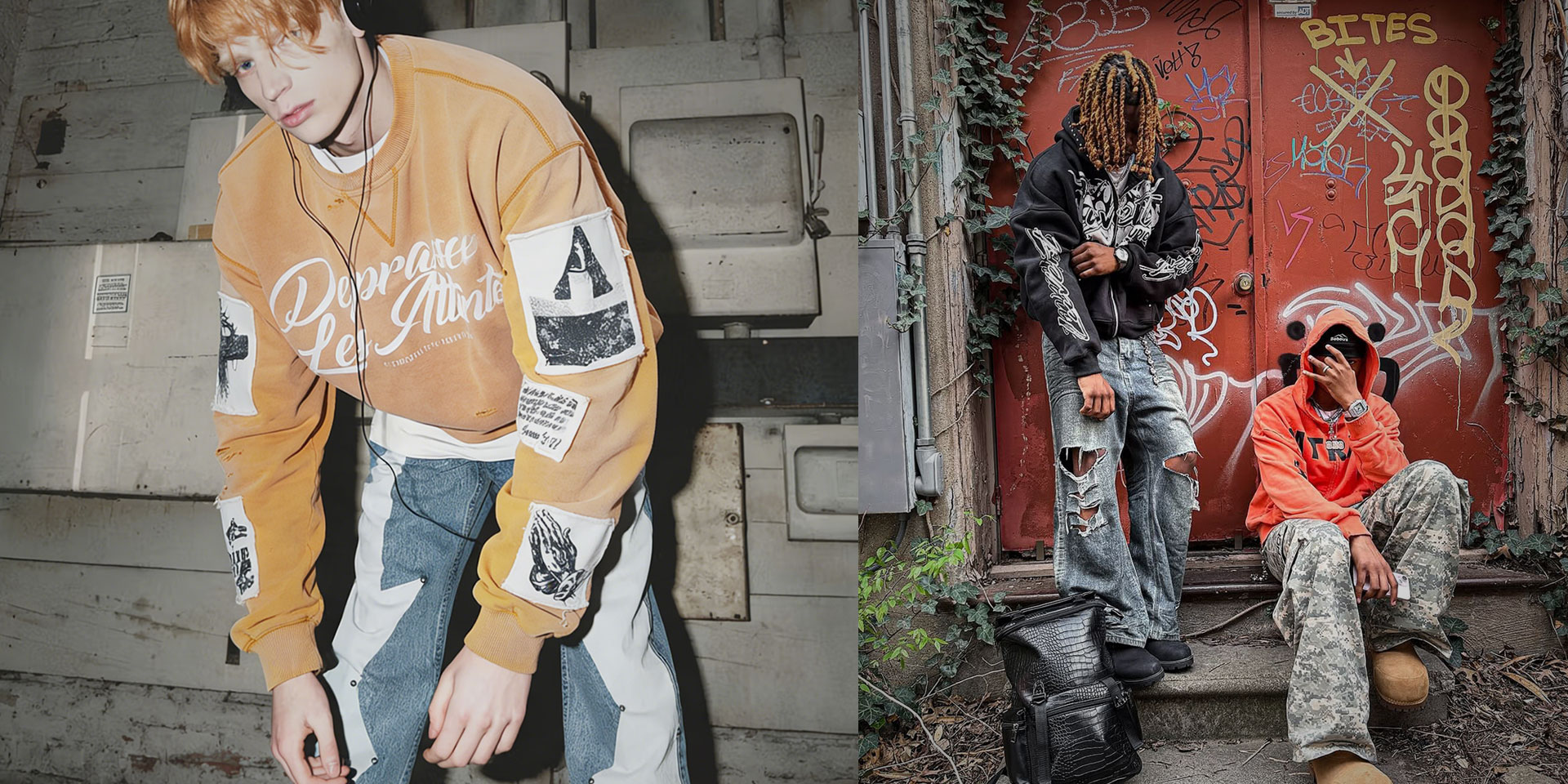 streetwear manufacturers Groovecolor OEM streetwear manufacturer Groovecolor premium streetwear manufacturer